
The Archive of the Institute of National Remebrance, Poland
Item set
- Title
- The Archive of the Institute of National Remebrance, Poland
- Archiwum Instytutu Pamięci Narodowej (AIPN)
- Description
-
1. History of Foundation
The Archive of the Institute of National Remembrance (AIPN) is part of the state office bearing the full name of the Institute of National Remembrance – Commission for the Prosecution of Crimes against the Polish Nation (Instytut Pamięci Narodowej – Komisja Ścigania Zbrodni przeciwko Narodowi Polskiemu), abbreviated to IPN. It was established on 19 January 1999, under an Act of 18 December 1998, and has research, educational, investigative, lustration, searching, commemorative, and archival powers.
The IPN headquarters are in Warsaw, while its regional branches are located in 11 provincial cities. The main task is the prosecution of crimes against the Polish Nation from 8 November 1917, throughout the Second World War and the communist period, to 31 July 1990, as well as conducting and popularizing scientific knowledge. An important role in these activities is played by the IPN Archive.
2. Legal Commission and Task
The IPN Archive and its regional branches collect materials and documents from 1917-1990, mainly devoted to the German and Soviet occupation and the communist period. The archive stores documents relating to: Polish People’s Republic (communist Poland) civilian and military security organizations (the secret police) from 1944–1990; individuals repressed for political reasons (documents originating in courts, prosecutors’ offices, and prison units); the fate of the Polish Nation from 1939 (including documents obtained from foreign archives, Polish institutions abroad, and private individuals); the crimes of Nazis, communists, and others that were committed against Poles and citizens of Poland from 1917 on.
The task of the archive, apart from storing, processing, and digitizing the gathered materials, is to issue certified copies, excerpts, reproductions, etc., and make them available to victims of repression, journalists, and researchers.
3. Material relevant to the study of religion under communism
The Archive of the Institute of National Remembrance contains a lot of archival material that can be used to research on religions during the communist period. This is due to the fact that in Poland, the main force that did not submit to communist authorities was the Roman Catholic Church. As a result, it was subjected to large-scale surveillance and state repression. This also applied to other religious communities, whether registered (Protestant Churches) or not (Jehovah’s Witnesses), as well as to other religious events such as miracles or apparitions (miracle of Zabłudów). The documents and materials produced and confiscated by the secret police, which were not destroyed at the beginning of the political transformation, were transferred to the IPN Archive. Among them, there are: observation and informer’s reports, operational plans, surveillance photographs and films taken with a hidden camera, transcriptions of phone taps, summary reports, and materials created by religious groups themselves but confiscated by the secret police.
4. Access for Researchers
Any researcher in humanities, social or economic studies, and/or law, or a person possessing a letter of recommendation from such a researcher, can apply to the IPN for access to the archival resources.
Application Information:
- https://ipn.gov.pl/en/arch/1555,Archives.html
- Creator
- Maciej Krzywosz
- Publisher
- This project has received funding from the European Research Council (ERC) under the European Union’s Horizon 2020 research and innovation programme No. 677355
- Date Created
- May 2022
Items
-
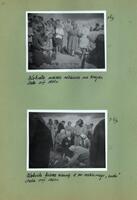 Initiated on 13 May 1965 by Jadwiga Jakubowska, the miracle of Zabłudów met with a growing social response in June and July. Despite the lack of any media coverage of the miracle, thousands of pilgrims from all over the country come to Zabłudów. The plan of their stay usually included two points. The first was to visit the Jakubowski family’s property in order to meet or at least see Jadwiga Jakubowska, a girl who saw the Marian apparition. The second point, for the pilgrims, was the miraculous meadow where the apparitions and other miraculous events occurred. There, on Sunday, 30 May, a riot took place when riot police attacked the people, waiting for the next apparition, with truncheons and tear gas. These actions were ineffective and the police units had to withdraw. The pilgrims treated this fact as a new miracle, and it made the miracle of Zabłudów famous throughout Poland. Pilgrims who came to the miraculous meadow in June and early July prayed, sang Marian hymns and talked about other miracles. The phrase “Our Lady of Zabłudów” appeared in litanies. They often left different votive offerings, such as flowers, ceremonial towels, candles and rosaries. People collected water from a dug pit, which was treated as a spring, and soil, which were considered to have miraculous curative properties. With the beginning of the quarantine of Zabłudów, whose real aim was to eradicate the miracle, access to the miraculous meadow was forbidden, guarded by a 24-hour police post. Pilgrims who tried to break through to the site of the Marian apparition were punished with a typhoid vaccination and a fine. Among the pilgrims in the miraculous meadow, there were also undercover secret police officers. Their task was to observe the behaviour of the people who came there, eavesdropping on conversations and taking surveillance photos, which were then entered into a special album. The presented photographs of pilgrims come from this album. The caption under the top photo reads: “A woman is hanging rosary on cross. Date 11.VII.1965”. The caption under the bottom photo reads, “A woman is collecting soil from the alleged ‘miracle’ site. Date 11.VII.1965”.
 -
 The photographs show a 14-year-old girl, Jadwiga Jakubowska, who saw the Marian apparition on 13 May 1965. The apparition, which took place on a meadow near Zabłudów, a small town in north-eastern Poland, led in the following months to a series of events known as the miracle of Zabłudów. It was one of the most significant miraculous phenomena during the Polish People’s Republic era and became particularly famous after the riots of 30 May 1965. Then, on the day of the next announced apparition, thousands of people clashed with the riot police, who tried to disperse the gathered pilgrims by force. As this was also the day of the “election” to the communist parliament of the Polish People’s Republic, the miracle of Zabłudów acquired a political dimension. For this reason, the communist authorities wanted to eradicate it as soon as possible. This was achieved in July 1965 by declaring the quarantine of Zabłudów, blocking the place of the apparition with round the clock police patrols and repressing the Jadwiga Jakubowska’s family and supporters of the miracles. The Polish communist secret police (in the Polish context – the Security Service) played a huge role in the elimination of the miracle. They entangled the Jakubowski family, supporters of the miracles and the local clergy with a network of secret collaborators who kept them informed of the mood and plans of those under surveillance. Furthermore, undercover secret police officers secretly observed the Jakubowski family’s property and the behaviour of pilgrims in the miraculous meadow. During these activities, they took about 300 photos with a hidden camera and some of them were later placed in a special album. The presented photographs of Jadwiga Jakubowska come from this album and have been captioned “Photo No. 1/29, 1/31, and 1/33 shows a ‘miraculous girl’ who was riding a bicycle in her backyard on 4.07.65 at 5.45 pm”.