
Clandestine rituals
Item set
- Title
- Clandestine rituals
- Description
-
Persecuted religious groups were often forced to conduct their religious rituals out of the public eye. Having no legal status and being closely watched by the authorities, these communities often established permanent or temporary places of worship in hidden or underground spaces or in private houses, where they could conduct their religious services in the safety afforded by secrecy. Some groups held their meetings and rituals in open spaces (typically in isolated locations such as woods or caves), often under the disguise of various secular activities as excursions, hiking trips or family holidays. In the generally anti-religious environment of communist regimes, even members of legally recognised churches opted sometimes to hold their ritual activities in the domestic sphere for fear of various kinds of social sanction or retribution.
Cases of secret rituals recorded by the secret police are present in the archival record from across the region including Ukraine, Romania, Moldova and Hungary. There are examples of secretly held practices of Orthodox or Roman Catholic dissent groups as well as from the so-called sects of Protestant and Evangelical origin. Archival evidence of these rituals take various forms including confiscated images, surveillance photos, photographs and films of re-enacted rituals, descriptions in informant reports, secret police summary reports and intercepted private correspondence.
- Creator
- Agnes Hesz
- Publisher
- This project has received funding from the European Research Council (ERC) under the European Union’s Horizon 2020 research and innovation programme No . 677355
- Bibliographic Citation
-
Agnes Hesz, "Clandestine rituals"
http://hiddengalleries.eu/digitalarchive/s/en/item-set/352 - Date Created
- 2019
Items
-
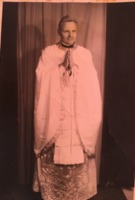 The four images illustrate the religious life of a Greek Catholic community in 1970s Transylvania as recorded by the community in photographs and how it is described by the Securitate on the basis of their surveillance and investigation of the community. These materials represent a rare instance where it has been possible to relate secret police descriptions to photographic materials that can still be found in the community. The first three images come from the private collection of Mihai and Ana Rus and form part of a group of photos related to their regular attendance at religious services in Bishop Todea’s house in Reghin where the bishop had also held their wedding and administered the Baptism and the Confirmation of their children. The Rus family could not pinpoint the exact date when they received the photos nor when they were taken. The fourth image is the first page of a Securitate document dated 23rd January 1971 that describes the situation of the clandestine Greek Catholic community in Reghin, Mureș county, a town near to the Rus family's home village, and the planned measures to be taken against the Greek Catholic community in the area. The first picture from the Rus family collection is a staged photograph of Greek Catholic Bishop Alexandru Todea in the period after his return from prison (1964) when he lived in the town of Reghin in Mureș county. The picture shows Todea in bishop's vestments in a staged, still photograph. His hands are clasped in prayer and is smiling softly towards the camera. The picture was probably taken at his request and served as reminder for the underground community that he ministered spiritually that he was alive and performing his pastoral duties. Moreover, it showed that his church, which had been dismembered by the communist regime in 1948, was still functioning. Descriptions of similar photographic devotional materials appear in Todea’s Securitate Informative file. Secret police agents and informers talk about a distribution network of pictures of Alexandru Todea within the Greek Catholic community. The documents also mention that a monetary value was placed on the photos of 3 lei. However this information was not verified in the interviews the Securitate carried out. The second picture was taken during The Great Entrance stage of the liturgy that was conducted in Alexandru Todea’s house. The picture shows an unidentified Roman Catholic priest dressed in Roman Catholic liturgical vestments holding the chalice (and therefore heading the procession) and a Greek Catholic priest (probably Fr. Augustin Giurgiu) holding the disk (ceremonial plate) with the unconsecrated Holy Body of Christ (the Prosphora). The picture shows that in this particular Byzantine service, the Roman Catholic priest holding the chalice leads the liturgy. The picture also shows a well-attended service with several kneeling women and men. The third picture was taken during a religious service in Bishop Todea’s house in Reghin. It is a snapshot of a detail of the back of the priest dressed in vestments during the Gospel reading. There is a clear image of three church goers, one kneeling holding a candle, probably the acolyte or alter server (or făt in Romanian). The fourth image is the first page of the Securitate's description of the religious life we see depicted in the Rus family's personal collection. At the bottom of the page the document states that Bishop Alexandru Todea (secret police code name Toma Aurel) performed religious services all over the town as well as in his house. Wedding ceremonies also took place in his house. The photographic images come from the private photo collection of Mihai and Ana Rus from Băița village, Mureș county, and were shown to the author during ethnographic fieldwork in August, 2018. The family also described religious life and practices of the community during the period when the photographs were taken. The family photo collection contains several photographs that are described in the secret police files on Bishop Alexandru Todea. The image of the Securitate document is part of the file CNSAS I3470. The Informative file on Bishop Alexandru Todea contains several descriptions of the altar in his house, the religious services performed there and surveillance pictures of people visiting the bishop. For related entries see:
 -
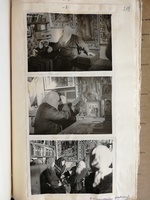 The photographs come from a 1959 KGB criminal case against three members of an Ioannite community in Cherkasy region, Ukraine. The images were designed as a photo album pasted into the secret police file. They portray father Mitrofan, the priest of the community in his house, which had been turned into a clandestine chapel. The first photo collage shows father Mitrofan dressed in Orthodox vestments against a background of icons, performing a religious service and talking to women, seemingly his followers. The second photo collage records the ritual washing of feet, also performed in father Mitrofan’s home. These photographs differ from typical secret police arrest or surveillance images. They intend to depict religious community life in an apparently natural context. At the same time the good quality of the photos, taken with a bright artificial light, indicate that these representation of rituals were staged. The last three images show the results of a police search of the clandestine chapel. The photos of cash confiscated during the police search and a table nicely served with food and drinks were used as incriminating evidence of the priest’s profiting from illegal economic activities. An image of a coffin and shelves with religious literature were intended to demonstrate the esoteric and fanatically sectarian nature of a repressed community. The last image constitutes a valuable source for the study of folk icons and handmade religious images circulated in the Soviet-era religious underground. It depicts confiscated and later destroyed icons used by the community. Apart from the portrait of father Mitrofan himself, there is an image of father John (Ioann) of Kronstadt, a famous Russian priest venerated by the community as a saint (hence the name of believers, the Ioannites). There is also a picture of Ambrose of Optina, placed together with the portrait of father John of Kronstadt in the same frame. Hieroschemamonk Ambrose was one of the most famous starets in Optina Monastery. He is pictured here on his deathbed. The choice of that image appears to be meaningful, as death and the afterlife were particularly sensitive issues for the community. The believers even built a clandestine Christian cemetery called “New Jerusalem”, photographs of which are also present in the secret police file as incriminating evidence. Ioannitism was a popular apocalyptic and chiliastic movement that emerged from the Russian Orthodox tradition at the beginning of the 20th century. The Ioannites were mainly peasant believers from the Russian and Ukrainian countryside, who venerated father John of Kronstadt (1829-1909), an archpriest from a town near St. Petersburg, one of the most popular religious personalities in late imperial Russia. A charismatic preacher, he was known as a blessed healer and wonder-worker, “the first modern Russian religious celebrity, with his image in souvenir scarves, mugs, placards, and postcard” (Kizenko 2000:2). During his lifetime, the pilgrimage to Kronstadt became a mass phenomenon, as thousands of believers all over Russia travelled to Kronstadt to see the “prophet.” Ioannitism, however, never constituted a unified religious movement, neither theologically, nor organisationally. It was rather constituted of dispersed peasant communities and individual wondering book-sellers, prophets and prophetess united by the common apocalyptic vision of the world, and centred around the figure of father John. Some believers remained within the Russian Orthodox Church, venerating father John as a blessed worshiper; others worshiped father John as the prophet Elijah or the embodiment of the Trinity, or Jesus Christ himself, thus, cutting themselves off from the official Church structures. In the early Soviet period, the Ioannites were persecuted as harmful ecclesiastic-monarchist sectarians. Driven underground, Ioannite communities built clandestine chapels and continued to live as underground monastic communities scattered from Western Siberia to Ukraine. Repression and shared underground experience drew the Ioannites together with catacomb True Orthodox communities. In the later years, this was even further facilitated by the Soviet secret services that made no distinction between the Ioannites and the True Orthodox Christians. Thus, the arrested believers in this criminal case were charged as the members of the True Orthodox Church. Father Mitrofan was known among believers as a miraculous healer. The village of Osytniazhka, where he lived, attracted numerous pilgrims who sought his blessing and spiritual help. The trial of father Mitrofan and his followers in 1959 was widely publicised. Apart from the official trial, a show-like civil trial was also held, which was recorded and later turned into a propaganda film titled “The End of a Spider.” The verbatim record of the civil trial is attached to the secret police file. Some photos found in the secret police file also appear in the film, which proves that the film was made under the direct supervision of the secret services. The photographs in this entry come from the State Archive Branch of the Security Services of Ukraine in Kyiv. The file reference is: fond 6, sprava 75174. The file consists of three volumes. Along with the photographs presented in this entry there are other images of the community and their religious artefacts. The file contains also numerous interrogation records of arrestees and witnesses. Three original Ioannite handwritten manuscripts of “The Dream of Father John of Kronstadt” are also attached to the file. Other confiscated religious writings, such as “The Explanation of the Apocalypse”, the brochure “Life story of starets father Mitrofan”, and Mitrofan’s homilies were destroyed as they are absent in the file. Their images, however, appear in the above mentioned propaganda film. For further readings see: Kizenko, Nadieszda. A Prodigal Saint: Father John of Kronstadt and the Russian People. Pennsylvania State University Press, 2003 Tepliakov, A.G. Ioannity Zapadnoi Sibiri v dokumentakh VChK-OGPU-NKVD (1920-1940 gody). Vestnik Tverskogo gosudarstvennogo universiteta. Seria: Istoria, 2010, vol. 30(4):128-136 Shugaeva, L. Ioannity: Techiia khiliastychno-eskhitalohychnoho spriamuvannia pravoslavnoho pokhodzhennia. Ukrainske relihieznavstvo. 2006, vol. 39:145-153 For related entries see:
 -
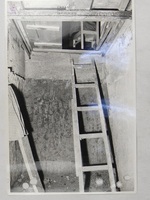 The 4 images are taken from a secret police personal file and were used as evidence of an Old Calendarist underground monastery in Bucharest. The community was led by the Old Calendarist bishop Evloghie Oța. According to the communist state legal framework, the Old Calendarist Orthodox Church was an illegal entity. These pictures documented a sweep operation of the secret police that ended in the destruction of the underground church and the arrest of the bishop. We cannot date the pictures precisely because the community kept rebuilding the underground chapel and the secret police destroyed it each time from 1965 until 1983. The community dated from 1964 when their bishop was released from prison and was held together under his charismatic leadership. During the 26 years of the community existence under communism their number increased gradually. They had several brothers in the monastery and a parish that consisted of regular church goers and people that came from time to time from various places across Romania. The bishop visited and maintained a correspondence with the geographically distant members of his flock. This form of parish is typical for an Old Calendarist community in the communist period but not typical for a regular Romanian Orthodox Church parish. For this reason the numbers of believers cannot be accurately assessed. The file contains several other pictures (14 in total) and two maps of the house and the underground chapel. The pictures follow standard crime scene photographic principles, illustrating the exterior, means of entry to the underground chapel as well as the main incriminating evidence and close up details of particular elements that elucidate the crime. They also show the methods by which the building was transformed from a house into an illegal underground chapel including photos linking the bishop and parishioners to the site. The pictures selected here, illustrate common tropes of illegal religious activity: the route of entry via a ladder to the underground chapel; the ritual space; and the means by which the community financed itself. The third picture reveals the altar table and icons surrounding it together with religious service books, candles and items of from episcopal paraphernalia. Note particularly the crosier and the mitre, both elements that indicate the rank of the officiant that is not present in the picture. The forth picture in this entry shows the money next to several diptychs (several lists of names for whom religious service has to be held are observable in the picture). A stole and a censer can also be seen in this picture, religious objects and garments effectively linking the money to the religious service provided. Although the secret police implied that the community was hiding underground the Old Calendarist subterranean religious spaces and/ or underground chapels were not necessarily used for hiding in. There is an Orthodox Christian monastic tradition of locating sites of worship in cave and subterranean spaces. For related entries see:
 -
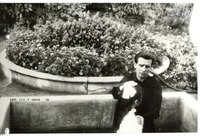 These images were confiscated from an underground Pentecostal community in Budapest-Pesterzsébet in 1972. The first image depicts a baptism where pastor József Németh is baptising a young girl. The second image is a group-picture of pastor József Németh and another five congregants in white who had just been baptised. They are standing with presumably other congregants and family members. The third image depicts pastor József Németh preaching to his congregation in their hidden house church. Prior to confiscation, the photos belonged to pastor József Németh. The photos were taken by a member of the community named in the file. 12 images were confiscated altogether along with several other religious materials by the secret police during a house raid on September 26th, 1972 during a regular Tuesday service. The images were used as incriminating evidence against the leading figures of the community including pastor József Németh himself. József Németh had separated from the officially recognised Evangelical Christian Church (Evangéliumi Keresztény Egyház), which was the recognised Pentecostal organisation, in 1968 after being accused of a series of "misdemeanors" by the Church. Following this, the secret police initiated an investigation on the grounds that the religious group held no official permit to operate. In 1972 the secret police decided to take action and according to the investigation file the following objectives were set out: a) end the illegal religious activity, b) collect evidence for the illegal activity and c) assess the valuables of the illegal community. The main accusation against József Németh and his congregation was the misuse of the right to freedom of association. The secret police used an anonymous note written by a citizen as a pretext (a common practice of the Hungarian secret police) in order to justify a raid on the community. After the house search József Németh and other leading figures in the community were interrogated on several later occasions. Pastor József Németh received a suspended sentence of 3 months. As part of the Hidden Galleries research project, these photos were later shown to the community. From them we know that the hidden house chapel was no longer used following the house raid and due to ongoing surveillance the community dissolved. József Németh only succeeded in planting a new community ten years later in 1982. The new community began to gather again in the same hidden house chapel. However, by this time pastor József Németh had become a member of the officially registered Free Christian Church (Magyarországi Szabadkeresztyén Gyülekezet). We also learned that the girl in the picture is the daughter of the pastor, who was 12 years old at that time, and that the baptism took place in the garden of the hidden house church in a specially constructed font. The confiscated images serve as evidences proving the secret religious activities of the religious group. The photographs come from file ÁBTL 3.1.9. V-160122. Along with the confiscated images the file contains interrogation reports, the trial sentence, 27 crime scene photographs and other confiscated documents including a diary and the community’s cash book. For related entries see:
 -
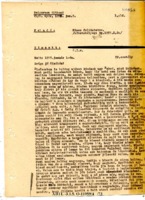 This word-for-word transcript of a typewritten personal letter tells about a secret home christening held in Budapest in December 1954. Amongst other deeply personal matters, the author, the child’s grandmother, briefly reports about the baptism. From this we learn that the child was baptised by a Piarist monk in the presence of the extended family, altogether 22 people. For the occasion the child’s grandfather erected a makeshift altar. As the letter-writer notes, he "made a beautiful altar. He made it so exceptionally nice that everybody was weeping with emotion. My entire home looked like a stage. Everything was shining bright.” Although in theory the Hungarian state granted freedom of religion even in the harshest years of the communist regime, the years of Mátyás Rákosi's rule (1947-1956), many people chose to refrain from openly practicing their faith in fear of various kinds of retribution. The secret baptism is a good example of how people tried to reconcile their religious needs with their desire to avoid conflict with the authorities by withdrawing their religious activities into the domestic sphere. It also nicely illustrates how people creatively turned their everyday environment into a sacred ritual space, even temporarily. And finally, this home-held ritual is also an illustrative example of silent resistance against the regime: as the letter goes on we learn that in his baptismal sermon the Piarist monk made derogatory metaphorical references to communism, much to the approval of the author. As her request at the end of the letter, „please burn this letter after reading” shows, however, she was very much aware of the risk her family was taking in conducting the baptism and in writing this letter. This transcript comes from a file on "illegal" organizations that were connected to a movement lead by a Piarist monk, György Bulányi. The goal of his movement was to keep Christianity alive through small secret local cells where members – mostly young people – could have access to religious education and spiritual guidance. The Bulányi movement started in 1945, and gained momentum after 1948, when the nationalization of church-owned schools excluded historical churches from educational activities and drastically decreased their access to young people. While most of its leaders came from the Piarist order, one of the four monastic orders that were allowed to keep some of their schools and were granted legal status after the dissolution of religious orders in 1950, many of the movement's activists were former members of other banned monastic groups. The secret police considered the movement an "illegal clerical-fascist organization" which, under the disguise of religion, was working to undermine democracy and the building of socialism. For this reason, the secret service had been gathering information about the movement since its early days. As a result, Bulányi and other leading figures were arrested and condemned in 1952. The movement, however, did not cease to exist and the ÁVH, the Hungarian secret service at the time, continued to surveil its activities extensively for at least another decade. The letter comes from a documentary file containing diverse materials, and focusing on groups mainly lead by lay female activists and former nuns. It includes no additional information concerning the letter; apart from their names we don’t know who the correspondents were, what their social background was or what kind of relationship they had with each other. Neither is there any direct information about their involvement in the movement or about the way the secret police got hold of the letter. However, the context of the file allows us to assume that the addressee was a member of a religious cell, officially deemed illegal. The letter is placed in the file among other letters, which indicate that it may have been used as evidence of the clandestine religious activity of Piarist monks. The letter is included in file ÁBTL 3.1.5 O-11959/4. Apart from this letter the file contains copies of personal letters and postcards, confessions under interrogation, reports on illegal gatherings, transcripts of tapped phonecalls and recorded gatherings, and detailed reports on shadowings. For further readings see: Bögre Zsuzsanna – Szabó Csaba 2010 Törésvonalak. Apácasorsok a kommunizmusban. Budapest, Metem–Historia Ecclesiastica Hungarica Alapítvány–Szent István Társulat. Mezey András 2014 Az első hazai bázisközösségek: a Bulányi-jelenség és a Katolikus Egyház az 50-es évek elején In Barna Gábor – Povedák Kinga (ed.): Lelkiségek, lelkiségi mozgalmak Magyarországon és Kelet-Közép Európában. For related entries see: