Pentecostal Christianity
Item set
- Title
- Pentecostal Christianity
- Description
-
Pentecostalism is a form Evangelical Christianity that emerged in the US at the turn of the 20th century. The revival meeting at the Azusa Street Mission in Los Angeles in 1906 is popularly regarded as the beginning of the movement. Within a few decades, the movement had established itself worldwide. Nowadays it is the fastest growing branch of Christianity with over 500 million adherents (mostly from non-Western countries). Pentecostal Christianity emphasises the work of the Holy Spirit and the direct experience of the presence of God by the believer, which is often realised through gifts of the Holy Spirit, such as speaking in tongues, healing and prophecy.
In Eastern Europe, Pentecostalism arrived within few years of the Azusa Street revival. The first Pentecostal churches and unions in Romania, Hungary and the Soviet Union were established in the 1920s. Between 1924 and 1938, first Pentecostal communities in Romania sent numerous petitions to the Ministry of Denominations for the recognition of their church under the name of the Baptist-Pentecostal Denomination or the Apostolic Church of God (Biserica lui Dumnezeu Apostolică). The petitions, however, were rejected and in 1930 the state authorities ordered the closure of Pentecostal houses of prayer. In Hungary, the first Pentecostal organization, the Hungarian Churches of God (Magyarországi Istengyülekezetek) was founded in 1928. In Russia and Ukraine, the first Pentecostal association was established in 1924 under the name of the Union of Christians of Evangelical Faith, led by Ivan E. Voronaev.
Both before and during the communist period, Pentecostal communities were persecuted by the state authorities in Romania, Hungary, Moldova, Russia, Ukraine and across the region. The 1942 decree in Romania, signed by Ion Antonescu, banned the Pentecostal Church because of its American ties. There were even plans to deport Pentecostal groups (alongside Inochentists and others) to concentration camps in Transnistria. In the Soviet Union, hundreds of Pentecostal believers were repressed and executed during the Stalinist terror of the 1930s. The main accusations were their alleged connections with the US, refusal of military service and other civil duties, as well as religious fanaticism.
In 1945, all Pentecostal churches in the Soviet Union were forcefully merged into the All-USSR Council of Evangelical Christian Baptists. Later, Romania followed the same model, merging all known evangelical groups (Baptists, Pentecostals, and Adventists) into The Federation of Evangelical Denominations. Those Pentecostal communities that refused to join the Council or the Federation were severely persecuted by the states.
Throughout the communist era, Pentecostal communities were placed under the control of the state authorities (the Committee on Religious Affairs in the Soviet Union, the Ministry of Denominations in Romania, and the State Office of Church Affairs in Hungary). By implementing numerous restrictive measures they attempted to reduce the rapid growth of Pentecostalism among protestant denominations. The secret police also intruded into the internal affairs of groups that were denied official recognition, among which were numerous Pentecostal groups who had refused to join recognised religious unions. - Creator
- Tatiana Vagramenko
- Publisher
- This project has received funding from the European Research Council (ERC) under the European Union’s Horizon 2020 research and innovation programme No . 677355
- Bibliographic Citation
- http://hiddengalleries.eu/digitalarchive/s/en/item-set/325
- Date Created
- 2018
Items
-
 The photographs originate from a criminal case file initiated on 16 October 1958 by the KGB against the Pentecostal bishop Viktor Belykh and were used during the investigation as material evidence, in particular for a forensic handwriting examination, the results of which formed the basis of the charge of “anti-Soviet activity” brought against him. Photographs 2–3 contain Christian poems and psalms (“Abel,” “As the Deer Longs for the Spring” (an allusion to Psalm 42:1), “How Wonderfully Saved by Christ I Am”), as well as a fragment of Belykh’s autobiography. The investigation interpreted these texts as allegories of the suffering of a believer persecuted by the authorities and “sent to distant lands” (an allusion to arrest and exile). Photograph 4 contains a letter intercepted by the KGB, in which the author, using allegorical language, sought to inform fellow believers of the arrest of the leaders of the Pentecostal underground headed by Afanasy Bidash and of his own illegal status. Photograph 5 includes fragments of dogmatic texts of Pentecostal doctrine, regarded as extremist in the USSR, bearing handwritten annotations. All these materials were obtained by the secret police in the course of operational–investigative measures and were incorporated into the case as material evidence. The handwriting examination, conducted at the initiative of the KGB, established that the handwriting in all the documents belonged to one and the same person – Viktor Belykh. Thus, agent-operational materials, the results of intercepted correspondence, and forensic examinations were integrated into a single evidentiary framework, enabling investigators to comply formally with the requirements of “socialist legality” while simultaneously securing a conviction. The resort to combinations of investigative methods such as this can be explained by the transformation of the Soviet security system in the post-Stalin era, when punitive practices gradually took on the appearance of “legal legitimacy” instead of overt violence. In the late Stalin years (up to 1953), investigations against individuals accused of anti-Soviet crimes were largely formal – the required “confessions” were obtained through physical or psychological coercion. Due to the poor quality of investigations, in August 1954 alone, regional and district courts of the Ukrainian SSR returned 216 cases to the KGB for additional investigation. The decree of the CPSU Central Committee dated January 19, 1955, “On Measures for the Further Strengthening of Socialist Legality and the Enhancement of Prosecutorial Supervision,” abolished the extrajudicial bodies of the Ministry of Internal Affairs and the Ministry of State Security, which had previously possessed the authority to issue sentences even in absentia. The “principle of socialist legality” was reinstated, declaring that no one could be found guilty without a court verdict, whilst prosecutorial supervision over KGB operations was reinforced. By decree of the Presidium of the CPSU Central Committee dated May 24, 1955, special departments were created within the offices of the Prosecutor General of the USSR and the union republics to oversee legality within the KGB system. KGB anti-religious divisions were instructed to gather indisputable evidence of the “criminal activity” of monitored individuals through intelligence and operational measures. In such operations, a wide range of special means was employed: – wiretapping of telephone conversations (code “N”), – external surveillance (code “NN”), – censorship of correspondence (code “PK”), and others. Investigative departments, in turn, were required to legalize materials obtained by such means – that is, to present them as formal evidence admissible in criminal proceedings. On the basis of these documents, investigators were expected to “substantiatedly” prove the guilt of the accused while adhering to the official ban on physical or psychological coercion. After the investigation was completed, criminal cases against organizers of “anti-Soviet sectarian groups” and their closest associates were to be submitted to court, while for ordinary believers – in the absence of serious offenses – “preventive measures” such as warnings or surveillance were recommended. In summary, the case of Bishop Viktor Belykh became a revealing example of the new model of Soviet repression in the late 1950s – a shift from overt violence and fabricated confessions to “legally formalized” methods of control. It reflects the transition of the KGB from Stalinist terror to a system of “legalized persecution” of religious leaders, where the document and expert signature replaced the instruments of torture and forced confession.
 -
 These photographs are taken from the criminal case file opened on October 16, 1958, by the KGB against the Pentecostal bishop Viktor Belykh (Photos 1, 2). Holding a high spiritual position, Belykh was a member of the episcopal collegium that oversaw the life and activities of all Pentecostal congregations in the USSR. By virtue of his pastoral work, he personally knew the entire leadership of the Pentecostal movement, which made him a valuable source of information for the state security organs. Since the Pentecostal movement at that time operated deeply underground and was carefully concealed, information about its structure and leadership was of particular interest to the KGB. During one of the first interrogations, investigators asked Belykh to provide details about the highest leadership of the Pentecostal movement and to identify them from a photograph seized from him during the investigation. Having previously worked for the KGB as a covert agent and, likely, hoping to mitigate his potential punishment, Belykh agreed to cooperate with the investigation. Photo 3 is of the official identification protocol carried out by Belykh, with the attached photograph depicting leading figures of the Pentecostal movement in the USSR. On the right in the center sits the closest associate of the first chairman of the Union of Pentecostals of the USSR, Ivan Voronaev – the secretary of the Union’s board, Mikhail Luchinets. On the left in the center is the bishop of the Piatykhatky diocese and the head of all underground Pentecostal congregations in the country, Afanasy Bidash. To his left is the bishop of the Pentecostals of Belarus, A. Kasperovich, and behind him stands the bishop of the Pentecostals of Ukraine, Ivan Levchuk, among others. In addition to information about the leadership, Belykh also provided the KGB with data on underground Pentecostal communities in the Cherkasy region. He identified believers from the village of Ruska Polyana in the Cherkasy district (Photo 4), among whom were those he had personally baptized in water. These photographs, once given to him as tokens of gratitude, were confiscated by the KGB and later used for operational purposes. The story of Viktor Belykh reveals how deeply the KGB penetrated the religious underground, exploiting human weaknesses and using photographic materials to compromise members of the community and to establish control. This episode reflects the tragedy of an era when faith and devotion often collided with the pressure of a repressive system, forcing spiritual leaders to become instruments of the state apparatus.
 -
 The photographs were taken from folder No. 3 (material evidence) of a seven-volume criminal case initiated by the KGB against five leaders of the underground Pentecostal Union in the USSR in 1957. The arrest of these individuals was a key stage in the KGB’s implementation of the centralized intelligence operation "Fanatics." These photographs were confiscated by the KGB during a search of the Pentecostal bishop Ivan Antonovich Levchuk. Levchuk was a leader of the Pentecostal children's and youth ministry, where he taught children and young people the fundamentals of faith. The photographs capture moments when Ivan Levchuk was working with young sisters in the community. As a young, unmarried bishop, he naturally attracted the attention of single sisters, some of whom gave him their photographs. One such photo (Image no. 4) has an inscription on the back in Russian: "To brother Vania from sister Valia as a keepsake. I give it as I am but promise to improve. December 31, 1956". It is possible that these photographs, as well as certain aspects of Ivan Levchuk’s personal life known to the KGB, were intended to be used as leverage for recruiting the bishop. The intention to recruit Ivan Levchuk as a secret KGB agent using compromising evidence was mentioned in a top-secret work plan of the 5th Department of the 2nd Directorate of the KGB of the Ukrainian SSR in the third quarter of 1960. This plan was approved and signed on July 6, 1960, by Colonel Sivovol, head of the 2nd Directorate of the KGB of the Ukrainian SSR. However, for unknown reasons, according to KGB documents, the recruitment work with Ivan Levchuk at that time was never completed. The KGB returned to this matter in April 1969, when it was established that Levchuk had married one of his fellow believers, who was more than 10 years younger than the bishop. Marriages with such an age gap were generally not approved by the Pentecostal leadership. According to the top-secret plan of agent-operational measures regarding the Pentecostals of Ukraine in 1969–1970, approved on April 28, 1969, by the Deputy Chairman of the KGB of the Ukrainian SSR, Colonel Nikolai Troiak, it was proposed to use the fact of Levchuk’s marriage and his subsequent desire to withdraw from underground religious activities due to fear of another arrest to recruit the bishop as a secret KGB agent. The file is stored in the State Temporary Archive of the Security Service of Ukraine in the Dnipropetrovsk Region, Fund P(6), Inv. 1, File П-24610. The file includes numerous photographs, arrest forms of repressed believers with photographs of the arrested individuals, numerous interrogation reports, verdicts, and other documents.
 -
 The photographs were taken from folder No. 3 (material evidence) of a seven-volume criminal case initiated by the KGB against five leaders of the underground Pentecostal Union in the USSR in 1957. The arrest of these individuals was a key stage in the KGB’s implementation of the centralized intelligence operation "Fanatics." These photographs were confiscated by the KGB during a search of the Pentecostal Bishop Ivan Antonovich Levchuk. The photographs capture the meeting of two bishops, Viktor Ivanovych Bilykh and Ivan Antonovych Levchuk, after the latter's release from a labor camp. Other fellow believers were also present at the gathering. The last time the bishops had seen each other on March 16, 1948, in Dniprodzerzhynsk (modern-day Kamianske), Dnipropetrovsk region, at an underground congress of leaders of clandestine Pentecostal communities in the USSR. As part of the MGB’s secret operation "Prophets," the entire leadership of the underground Pentecostals was arrested. By decision of the Special Council of the MGB of the USSR, Levchuk was sentenced to 10 years in labor camps, while Belykh received 8 years. According to operational and investigative materials, Belykh disclosed to the MGB all information about Levchuk’s underground activities and those of other Pentecostal leaders. Given this fact and other aspects of his biography, Belykh was recruited by the Soviet secret services as a secret agent and tasked with infiltrating and monitoring his fellow believers. In photograph no. 3, the act of Christian greeting in the form of the "kiss of love" (see 2 Corinthians 13:12; 1 Peter 5:14) is captured, performed by the co-religionists after a long separation. This commandment presupposes the presence of heartfelt love for one’s brother, which should be expressed through a kiss. In the absence of such love, the "kiss of love" can easily turn into a "Judas kiss." In photograph no. 4, the “kiss of love” is captured between Bishop Belykh and Bishop Levchuk but given the former’s betrayal of the later we might question whether this was truly a "kiss of love," or a "Judas kiss"? The photographs are preserved in Folder No. 3 (material evidence) of a seven-volume criminal case initiated by the KGB against the leadership of the Pentecostals, which operated in Pyatykhatky, Dnipropetrovsk Region. These photos are kept in the State Temporary Archive of the Security Service of Ukraine in the Dnipropetrovsk Region, Fund Р(6), Vol. 1, File P-24610. The case includes numerous photographs, arrest warrants of repressed believers with photos of the detainees, extensive interrogation reports, the verdict, and other documents.
 -
 The photographs were taken from folder No. 3 (material evidence) of a seven-volume criminal case initiated by the KGB against five leaders of the underground Pentecostal Union in the USSR in 1957. The arrest of these individuals was a key stage in the KGB’s implementation of the centralized intelligence operation "Fanatics." These photographs were confiscated by the KGB during a search of the Pentecostal bishop Ivan Antonovich Levchuk. They reveal previously unknown pages of the bishop’s biography, namely his service as a soldier in the Soviet Army during World War II. Ivan Antonovich Levchuk was born on December 27, 1920, in the village of Soshichne, Kamin-Kashyrskyi district, Volyn region, into a large Protestant family. At that time, this territory was part of Poland. On September 17, 1939, under the Molotov-Ribbentrop Pact, the Soviet Army occupied Western Ukraine and annexed it to the USSR. The Sovietization of these regions began and lasted until 1941. It was at this time (1940) that Levchuk was baptized upon his faith in the village of Kachin, Kamin-Kashyrskyi district, Volyn region, by presbyter Luka Stolyarchuk. From 1941 to 1944, these territories were occupied by the Wehrmacht. On January 18, 1944, Soshichne was liberated by Soviet forces, who then launched a mass mobilization of young people into the Soviet Army. Ivan Levchuk was drafted into the 389th Rifle Division, where, according to the bishop, he served as a signalman-telephone operator. He participated in battles in Poland, where in January 1945, during another battle with the Nazis, he suffered concussion. In February 1945, after hospitalization, he was transferred to the supply platoon of the 172nd Rifle Division, 134th Artillery Regiment of the 13th Army, 1st Ukrainian Front. According to Levchuk, he continued to serve as a signalman-telephone operator and later as a tailor. At that time, the Ukrainian Front was commanded by Marshals Georgy Zhukov (March–May 1944) and Ivan Konev (May 1944–May 1945). The units in which Levchuk served participated in a series of major military operations. Top-secret KGB materials indicate that Levchuk was discharged from the Soviet Army on August 15, 1946, with the rank of sergeant. During his military service, the future bishop was awarded two medals ("For the Liberation of Prague" and "For Victory over Germany") and two military badges ("Guards Badge" and "Excellent Artillerist"). According to official sources, the Guards Badge was awarded to soldiers of military units that demonstrated mass heroism, courage, and high military skill on the battlefield. These units received honorary titles and were transformed into Guards units. The "Excellent Artillerist" badge was awarded to soldiers who demonstrated "outstanding achievements in artillery shooting and anti-tank rifle fire" on the battlefield. In photograph No. 4, it is visible that Ivan Levchuk (sitting in the center with an open book in his hands) wore a Soviet military uniform with sergeant's shoulder boards after his discharge, as well as the aforementioned awards. The file is stored in in the State Temporary Archive of the Security Service of Ukraine in the Dnipropetrovsk Region, Fund P(6), Inv. 1, File П-24610. The file includes numerous photographs, arrest forms of repressed believers with photographs of the arrested individuals, numerous interrogation reports, verdicts, and other documents. For more examples of the confiscated materials from operation “Fanatics” see entry “Material evidence from the centralized intelligence case “Fanatics” against Pentecostals in Ukraine”.
 -
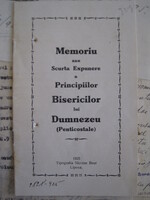 This booklet, which was published in 1925, appears in a Ministry of Religions and Arts file dated the same year. This booklet was the second official declaration of Pentecostal faith submitted to the Romanian authorities as part of their requests for official recognition. The first appeal by a Pentecostal believer came in 1924 but this was rejected by the Ministry of Religions in Decision no. 5734 of the 29th January 1925. The Ministry declared that the ‘Declaration of True Foundation’ (Declararea [sic] fundamentului adevărat) did not offer sufficient guarantees to meet the conditions of article 22 of the Constitution. A new declaration in the form of this booklet entitled 'Short statement on the principles of the Churches of God (Pentecostals)’ was attached to the second request for official recognition. This was also rejected with Decision no. 24536 of 1928 in which it was reaffirmed that Pentecostal communities remained on the banned list. This booklet appears in ANIC – fond. Ministerul Cultelor și Artelor 172/1925 amongst diverse documents relating to a range of so-called sects and especially the problem of their presence within the military. Also included is in this file is a similar declaration of faith simply entitled Declaration (Memoriu) submitted to the Ministry of Religions and Arts in January 1925 by representatives of The Brethren (known as Creștin după Evanghelie, Christians of the Gospels in Romanian) from the city of Ploiești as part of an appeal for recognition of their community. For further reading see: Ciprian Bălăban, Istoria Bisericii Penticostale din România (1922-1989) - instituție și harisme. Oradea: Editura Scriptum, 2016. For related entries see:
 -
 These images were confiscated from an underground Pentecostal community in Budapest-Pesterzsébet in 1972. The first image depicts a baptism where pastor József Németh is baptising a young girl. The second image is a group-picture of pastor József Németh and another five congregants in white who had just been baptised. They are standing with presumably other congregants and family members. The third image depicts pastor József Németh preaching to his congregation in their hidden house church. Prior to confiscation, the photos belonged to pastor József Németh. The photos were taken by a member of the community named in the file. 12 images were confiscated altogether along with several other religious materials by the secret police during a house raid on September 26th, 1972 during a regular Tuesday service. The images were used as incriminating evidence against the leading figures of the community including pastor József Németh himself. József Németh had separated from the officially recognised Evangelical Christian Church (Evangéliumi Keresztény Egyház), which was the recognised Pentecostal organisation, in 1968 after being accused of a series of "misdemeanors" by the Church. Following this, the secret police initiated an investigation on the grounds that the religious group held no official permit to operate. In 1972 the secret police decided to take action and according to the investigation file the following objectives were set out: a) end the illegal religious activity, b) collect evidence for the illegal activity and c) assess the valuables of the illegal community. The main accusation against József Németh and his congregation was the misuse of the right to freedom of association. The secret police used an anonymous note written by a citizen as a pretext (a common practice of the Hungarian secret police) in order to justify a raid on the community. After the house search József Németh and other leading figures in the community were interrogated on several later occasions. Pastor József Németh received a suspended sentence of 3 months. As part of the Hidden Galleries research project, these photos were later shown to the community. From them we know that the hidden house chapel was no longer used following the house raid and due to ongoing surveillance the community dissolved. József Németh only succeeded in planting a new community ten years later in 1982. The new community began to gather again in the same hidden house chapel. However, by this time pastor József Németh had become a member of the officially registered Free Christian Church (Magyarországi Szabadkeresztyén Gyülekezet). We also learned that the girl in the picture is the daughter of the pastor, who was 12 years old at that time, and that the baptism took place in the garden of the hidden house church in a specially constructed font. The confiscated images serve as evidences proving the secret religious activities of the religious group. The photographs come from file ÁBTL 3.1.9. V-160122. Along with the confiscated images the file contains interrogation reports, the trial sentence, 27 crime scene photographs and other confiscated documents including a diary and the community’s cash book. For related entries see:
 -
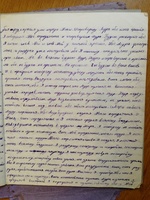 This is a manuscript with a Pentecostal prophesy confiscated in 1953 from an arrested Ukrainian woman, who was known as a Pentecostal prophetess. The prophecy is handwritten in a notebook and is 15-page long. It narrates the coming death of Ashur, who will be overthrown from his throne by God and will be shot dead. After his death, all the prisoners will be released and people will live in freedom. The prophecy also stresses a special religious role of Ukraine and Kiev, its capital, that will become a place of great spiritual awakening. The item comes from the 1953 MGB penal case against four Pentecostal believers, all Ukrainian women. The manuscript with the prophecy was used by the MGB as incriminating physical evidence of their “anti-Soviet propaganda”, including “dissemination of libels against Soviet leaders”. The “Anti-Soviet Agitation and Propaganda”, the infamous article 58 of the Penal Code, was a common criminal offence used to incriminate to religious believers in the Soviet Union. Officially believers could not be persecuted for their religious beliefs, as the Soviet Constitution granted religious freedom on paper. Penal cases against religious believers were fabricated in terms of extreme politicisation of religious practices. A KGB report from 1963 states, “We do not fight against believers or religion, but we do fight against the use of religion by anti-Soviet elements… in hostile to the Soviet state purposes”. The image of Ashur resembles Stalin, however, in one place of the prophecy Ashur is called Vyshinsky – the minister of foreign affairs in 1949-1953 and one of the main organizers of Stalin’s great terror, who signed thousands of death penalties in the 1930s. On the second image, the following sentences were underlined by an MGB officer, as supposedly having a distinct anti-Soviet meaning: “And liberty [volia] and freedom will follow soon; the days of freedom are approaching. For Ashur will be overthrown. And people will be called. I will call up people from many countries, and they will arrive and will [condemn] Ashur. The end has come, they call Ashur to death, for Ashur will be shot dead. Oh, oh, oh the storm will arrive for there will come the great bloodshed..." The prophecy goes on to recount how all prisoners will be released and how Kiev, the capital of Ukraine, will become the new Jerusalem. The "wandering prophetess", as she was described by the MGB, led a Pentecostal community in Kiev and travelled throughout Ukraine and as far as Siberia, preaching among religious communities. She was arrested in 1953 along with three other women pentecostal believers and sentenced to 25 years in labour camps. At this time there were a number of “illegal” religious groups in Soviet Ukraine referred to as the “religious underground”. They were regarded “harmful for the state by the very fact of their existence and the character of their activity”. In 1944, the All-Union Council of Evangelical Christians-Baptists was formed as the only recognised umbrella church body of all branches of Evangelical Christians. The communities that refused to enter the Council, including many Pentecostal groups, were considered criminal. Ukraine was the hotspot of Soviet-era religious persecutions as it was the place of the largest Christian Evangelical communities in the entire Soviet Union. Ukrainian Pentecostalism developed a particular culture of prophets, who were wondering across the wider region, preaching and gathering new communities. By the time of this penal case in 1953, according to the Soviet authorities, there were approximately 200 unregistered Pentecostal communities in Ukraine with over 200 prophets and prophetess. This manuscript comes from the State Archive Branch of the Security Services of Ukraine, fond 6, spr. 60259. The file contains records of arrest and transcripts of interrogations of four Pentecostal women on trial, transcripts of interrogations of witnesses, as well as a closing indictment, court records and a final court sentence. Two women (including the author of the manuscript) were sentenced to 25 years and two others to 10 years in labour camps. Alongside the manuscript reproduced here, the file contains one more notebook with handwritten religious writings and a press-cutting with an image of the American President Harry S. Truman. These confiscated items were also used as incriminating physical evidence against the arrested women. Twenty confiscated photographs and twenty one personal letters of believers were later destroyed as having no relevance to the case. For related entries see:
 -
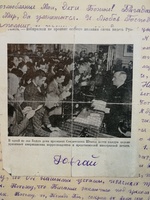 This press-cutting with an image of the American President Harry S. Truman was confiscated from an arrested Pentecostal woman in February 1953 in Ukraine. The first image shows Truman receiving an international delegation of journalists. The picture has a title in Russian, “In one of the halls of the White house, the president of the US receives American and international journalists almost every week”. The press-cutting was taken from an unknown, presumably Russian diaspora journal printed in the USA. The item comes from a 1953 MGB penal case against four Pentecostal believers, all Ukrainian women. The confiscated press-cutting was used as incriminating evidence of their anti-Soviet activities and pro-American propaganda. Reading or possessing an American journal was illegal in the Soviet Union, as the Soviet political censorship banned most foreign media, particularly of diaspora origins. One of the arrested women was known as a Pentecostal prophetess. As the numerous, mostly fabricated, interrogation reports show, the woman preached the advent of Truman, anointed by the Lord to Ukraine and the coming peace and freedom of the country. As Truman was a Baptist and a religious man, she appears to have genuinely regarded him as the liberator of all believers. She preached that Ukraine would become the Millennial Kingdom where all people would receive the baptism of the Holy Spirit. In 1937, the NKVD had arrested her husband, also a Pentecostal believer. The woman never heard of him again. The closing indictment contained in the file, additionally states that, during their religious meetings, the arrested women also read Soviet newspapers one of which included the UN Charter. This was also used to incriminate the group on trial as it stated that the women intentionally “perverted the message” of Soviet newspapers. “Illegal” religious groups and their members were not persecuted expressly for their religious beliefs as, on paper, the Soviet Constitution granted religious freedom. Most of the repressed religious believers were incriminated for “anti-Soviet agitation and propaganda” or “counter-revolutionary activity” and penal cases against them are characterised by an extreme politicisation of religious practices. As a KGB report from 1963 states, “We do not fight against believers or religion, but we do fight against using religion by anti-Soviet elements… hostile to the Soviet state”. This image comes from the State Archive Branch of the Security Services of Ukraine, fond 6, spr. 60259. The file contains records of arrest and transcripts of interrogations of four Pentecostal women on trial, transcripts of interrogations of witnesses, as well as a closing indictment, court records and a final court sentence. Two women were sentenced to 25 years and two others to 10 years in labour camps. Alongside the image reproduced here, the file contains two notebooks with handwritten Pentecostal prophecies and writings that were also used as incriminating physical evidence. Twenty confiscated photographs and twenty one personal letters later destroyed as having no relevance to the case. For related entries see:
 -
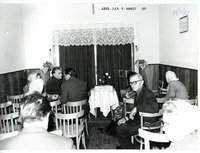 These pictures have been selected from the 27 crime scene photographs that were taken during a raid of pastor József Németh's community in a hidden house church created. The raid took place on September 26th, 1972 during a regular Tuesday gathering. The first photograph depicts the hidden house church in József Németh’s house in Pesterzsébet. On the picture we see nine congregants some of whom are facing the occasional table-alter, discussing the unfolding situation, others are turning towards the back of the room in order to follow events. Behind the alter, the double doors are covered with curtains which frame the alter. The house church is furnished with new chairs. The second image depicts the back of the room with congregants and possibly two officers. The third image presents the electric organ in the house chapel, while the fourth picture portrays the collection box. These three later photographs inform us of the intentions of the secret police to collect evidence for the supposed crimes of the community. The main interest of the secret police centered around finances of the illegal religious group. The secret police had a deep interest in finding out how the pastor could make a living only on the donations of the community without having a civil job and how the community could afford such a modern electric organ and new furniture. József Németh was expelled from the Evangelical Christian Church (Evangéliumi Keresztény Egyház), the recognized Pentecostal organization, in 1968 after a series of misdemeanors. The secret police initiated an investigation because the religious group held no official permit to operate. Németh’s community had been under surveillance since 1968. In 1972 the secret police decided to take action and according to the investigation file the following objectives were set out: a) end the illegal religious activity, b) collect evidence for the illegal activity and c) assess the valuables of the illegal community. The main accusation against József Németh and his congregation was the misuse of the right to freedom of association. The secret police used an anonymous note written by a citizen as a pretext (a common practice of the Hungarian secret police) in order to justify a raid on the community. After the house search József Németh and other leading figures in the community were interrogated on several later occasions. From the investigation file we find out that four police officers, a driver and a staff photographer participated in the operation. In the file the names of the officers participating in the house search are present without anonymization. After the raid, the hidden house church was no longer used and under ongoing surveillance the community dissolved. Pastor József Németh received a suspended sentence of 3 months. He later succeeded planting a new community in 1982. The community began to gather again in the same hidden house church. However, by this time pastor Németh had become a member of the officially registered Free Christian Church (Magyarországi Szabadkeresztyén Gyülekezet). The photographs come from file ÁBTL 3.1.9. V-160122. Along with the photographs of the crime scene there are confiscated images taken by the community, interrogation reports, the trial sentence and other confiscated personal documents including the community's cash book and diary. For related entries see: